
Table of Contents
- 1. INTRODUCTION TO BIOINFORMATICS
- 2. Why Do We Need Bioinformatics? (Its Main Goals!)
- 3. Why Bioinformatics is Absolutely Essential!
- 4. Amazing Things Bioinformatics Can Do (Its Applications!)
- 5. Bioinformatics Databases: Our Digital Libraries of Life
- 6. Bioinformatics: The Secret Weapon in Vaccine Discovery!
- 6.1 Overview: Revolutionizing Vaccine Development
- 6.2 Genomics: The Blueprint for Vaccine Development
- 6.3 Smart Vaccine Design Strategies
- 6.4 The Computational Vaccine Design Workflow: A Step-by-Step Guide
- 6.5 Epitope-Based Vaccine Design: Targeting the Immune System Precisely
- 6.6 Real-World Impact: Unprecedented Speed and Success
- 7. Your Quick Review: Key Concepts in Bioinformatics!
1. INTRODUCTION TO BIOINFORMATICS
1.1 Definition
Bioinformatics is an exciting, interdisciplinary scientific field that blends biology with computer science, information engineering, mathematics, and statistics. Its main goal is to analyze and interpret vast amounts of complex biological data, developing clever methods and software tools to help us understand life's intricate secrets.
- Bioinformatics: Uses computation to better understand biology.
- Biological Computation: Uses bioengineering and biology to build biological computers.
- Computational Biology: Often considered synonymous with bioinformatics, focusing on theoretical aspects.
1.2 The Big Picture: What is Bioinformatics About?
Bioinformatics, sometimes called life science informatics, is a rapidly growing branch of biotechnology. Think of it as the ultimate bridge between the exciting world of biology and the powerful tools of information technology!
It provides essential tools that empower biologists to analyze data faster and push biotechnology innovations into practical applications, helping us better understand living systems.
| Core Functions of Bioinformatics | What Does It Do? |
|---|---|
| Data Mining & Analysis | Sifting through huge amounts of life science data to find valuable insights. |
| Data Integration & Simulation | Combining data from different sources and running computer experiments to predict biological behaviors. |
| Molecular Data Processing | Handling and making sense of information at the molecular level (like genes and proteins). |
| Genome Sequence Analysis | Reading and understanding the entire genetic blueprint of organisms. |
| Data Storage & Management | Organizing, securing, and efficiently managing all the complex biological information. |
Currently, Genomics – the study of an organism's entire genetic makeup – is at the very heart of bioinformatics, especially when we want to understand the fundamental processes of life.
2. Why Do We Need Bioinformatics? (Its Main Goals!)
| Objective Type | What Bioinformatics Aims to Achieve |
|---|---|
| Primary Goals (The Fundamentals) | Efficiently organize the massive amounts of molecular biology data scientists are generating. |
| Develop powerful computer tools and software to help analyze this complex data. | |
| Interpret the results from data analysis in a way that is accurate and truly meaningful for biological understanding. | |
| Applied Goals (Real-World Impact) | Explore and understand normal biological processes within living organisms. |
| Investigate new ways to enhance or improve existing biological processes. | |
| Revolutionize drug discovery by making it faster and more effective. | |
| Help create new target drugs for serious diseases. | |
| Support research into preventive medicines, especially for life-threatening conditions like cancer. |
💡 Quick Tip: Remember the 3 'O's of Bioinformatics Objectives!
Organize data, develop Outstanding tools, and accurately interpret Outcomes!
3. Why Bioinformatics is Absolutely Essential!
The rise of bioinformatics is driven by several key factors that have transformed biological research:
3.1 The Data Explosion!
The sheer volume of genomic information available has exploded, thanks to monumental efforts like the Human Genome Project. We're talking about massive amounts of DNA and protein sequence data that simply cannot be analyzed manually. Bioinformatics provides the tools to manage and make sense of this tidal wave of data!
3.2 Deeper Scientific Understanding
🧐 Bioinformatics Helps Us Understand:
- Gene Analysis: What genes do and how they function.
- Taxonomy Classification: Improving how we categorize living organisms.
- Evolution & Phylogenetic Relationships: Tracing the history of life and how species are connected.
3.3 Accelerating Pharmaceutical Applications
In the world of medicine, bioinformatics is a game-changer:
| Benefit | How Bioinformatics Helps |
|---|---|
| Rational Drug Design | Designing drugs more intelligently and effectively. |
| Reduced Development Time | Significantly cutting down the years it takes to bring a new drug to market. |
| Lower Research Costs | Making pharmaceutical R&D more affordable. |
3.4 Fueled by Technological Advancement
The extraordinary growth in information technology, combined with breakthroughs in molecular biology and recombinant DNA technologies, created a perfect storm for bioinformatics to emerge. It integrates these powerful fields to tackle biological challenges with cutting-edge tools.
4. Amazing Things Bioinformatics Can Do (Its Applications!)
Bioinformatics is a versatile field with widespread applications across many areas of biology and medicine:
| Application Area | What It Helps Us Do |
|---|---|
| Analyze Biological Processes | Understand the complex workings of cells and molecules. |
| Drug Discovery & Development | Speeds up and improves the process of finding and creating new medicines. |
| Target Drug Development | Helps design very specific drugs that hit particular disease targets. |
| Research & Development (R&D) | A powerful tool supporting all kinds of scientific studies and innovations. |
| Personalized Medicine | Tailoring treatments to an individual's unique genetic makeup. |
| Disease Diagnosis | Assisting in identifying genetic disorders and disease markers. |
| Evolutionary Studies | Mapping out how different species have evolved and are related. |
| Protein Structure Prediction | Modeling the intricate 3D shapes of proteins, which is crucial for understanding their function. |
💡 Think "DATA" for Bioinformatics Applications!
Drugs, Analysis, Treatment (Personalized), And understanding evolution!
5. Bioinformatics Databases: Our Digital Libraries of Life
5.1 What are Biological Databases?
Imagine libraries filled with every piece of biological information ever discovered – that's essentially what databases are for bioinformatics! They are organized collections of biological data, absolutely critical for research and applications.
| Key Characteristic | What Does It Mean? |
|---|---|
| Data Content | They hold both actual experimental results (empirical data) and predictions made by computers (predicted data). Often, you'll find a mix of both! |
| Specificity | Some databases are super focused, maybe on a single organism (like humans or E. coli), a specific biological pathway, or even a particular molecule. |
| Integration | Many databases pull together and combine data from lots of other databases, creating a richer resource. |
| Variety | They come in all shapes and sizes! They can differ in how the information is structured (format), how you access them, and whether they are publicly available or private. |
🔑 Key Takeaway: Databases are the backbone of Bioinformatics!
Without them, processing and understanding the sheer volume of biological data would be impossible.
5.2 Exploring Different Types of Biological Databases
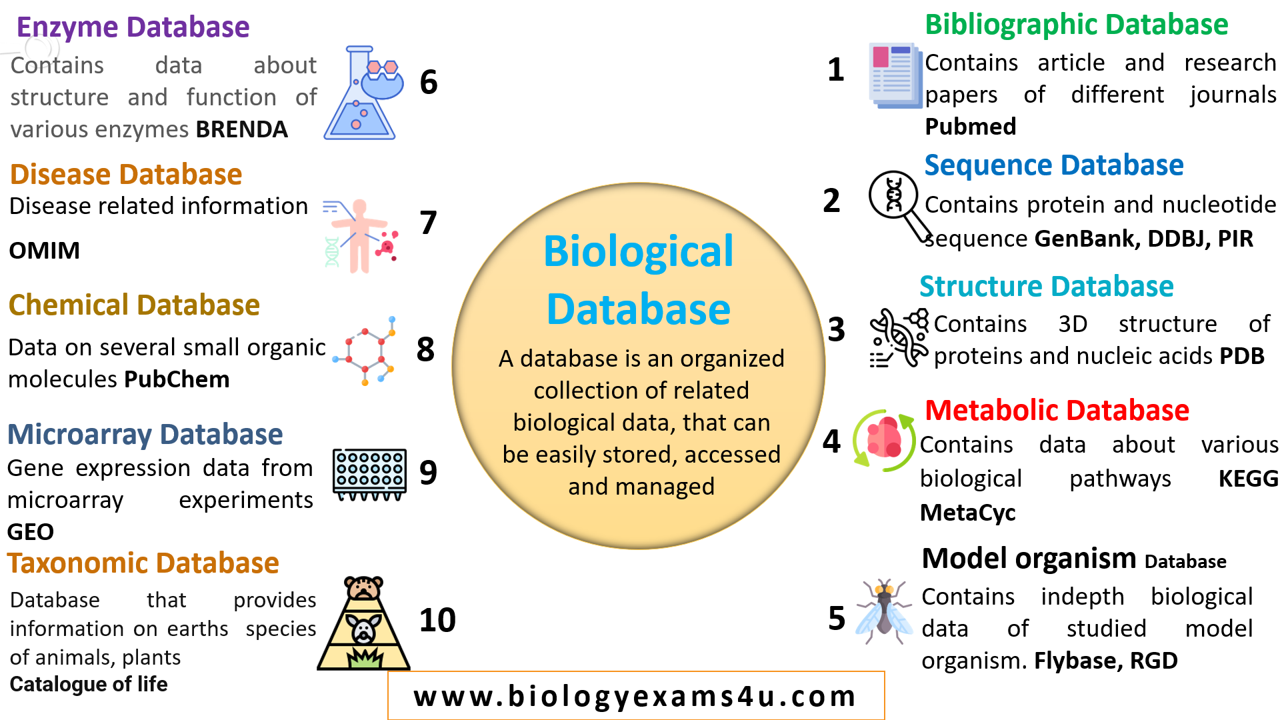
Here’s a look at some common categories of biological databases and what they store:
| Database Type | What Information Is Stored? | Famous Examples You'll Use! |
|---|---|---|
| Bibliographic Database | Scientific literature, research papers, and articles. | PubMed, MEDLINE |
| Taxonomic Database | Information about the classification of organisms and different species. | NCBI Taxonomy, ITIS |
| Nucleic Acid Database | All sorts of DNA and RNA sequences and related data. | GenBank, EMBL, DDBJ |
| Genomic Database | Comprehensive gene information and entire genomes of organisms. | Ensembl, UCSC Genome Browser |
| Protein Database | Amino acid sequences of proteins and their associated data. | UniProt, Swiss-Prot, PIR |
| Enzyme/Metabolic Pathway Database | Information on metabolic processes, biochemical pathways, and enzymes. | KEGG, BioCyc, BRENDA |
| Structure Database | Detailed 3D molecular structures of proteins, DNA, and RNA. | PDB (Protein Data Bank) |
| Disease Database | Information specifically related to human diseases. | OMIM, Disease Ontology |
| Chemical Database | Data on small molecules, chemical compounds, and their properties. | PubChem, ChEMBL |
| Microarray Database | Data from gene expression experiments, showing which genes are active. | GEO, ArrayExpress |
5.3 Essential Bioinformatics Databases for Your Research!
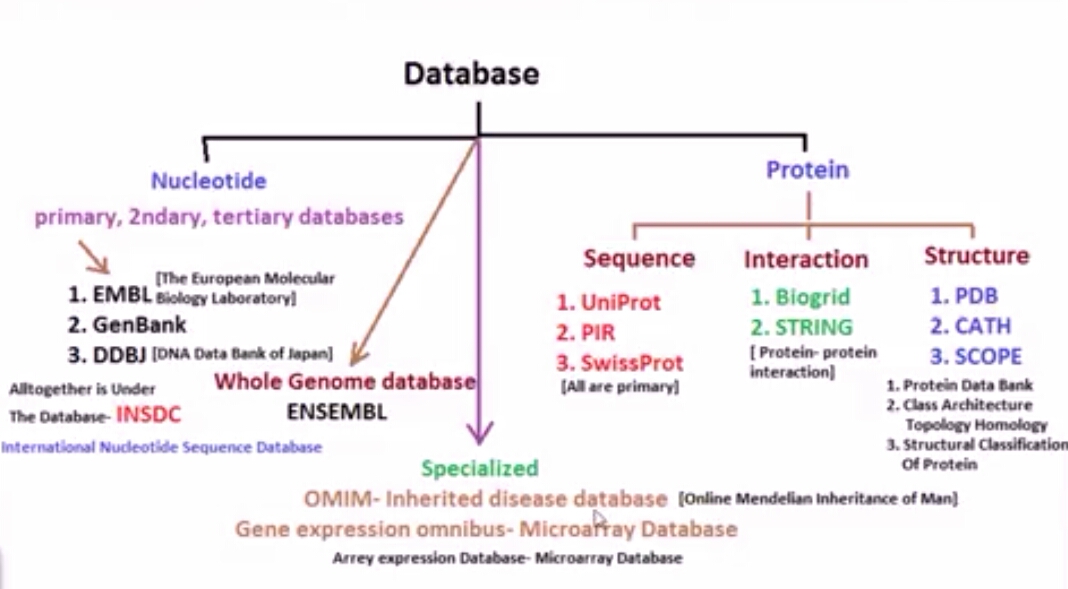
Depending on what you're trying to achieve, different databases will be your go-to tools:
| If You're Doing... | You'll Likely Use These Databases: |
|---|---|
| Biological Sequence Analysis | GenBank, UniProt |
| Protein Structure Analysis | Protein Data Bank (PDB) |
| Protein Families & Motif Finding | InterPro, Pfam |
| Next-Generation Sequencing Data Analysis | Sequence Read Archive (SRA) |
| Biological Network Analysis | KEGG, BioCyc, STRING, BioGRID |
| Metabolic Pathway Analysis | KEGG, BioCyc, MetaCyc |
| Molecular Interaction Analysis | STRING, BioGRID, IntAct |
| Functional Networks Exploration | GeneMANIA, STRING |
| Synthetic Genetic Circuits Design | GenoCAD |
| Drug-DNA Interaction Studies | PREDDICTA |
5.4 How Do We Categorize Bioinformatics Databases?
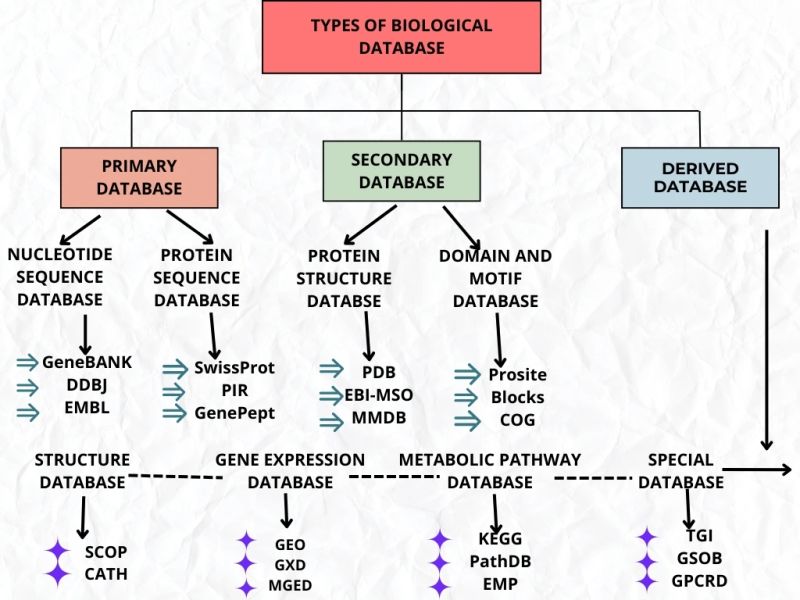
Bioinformatics databases can be classified in several helpful ways, making it easier to find the exact information you need:
| Classification Category | What's Stored Here? | Real-World Examples |
|---|---|---|
| a) By Data Type |
| GenBank, PDB, PubMed, KEGG, GEO |
| b) By Data Source |
| Primary: GenBank, PDB, UniProt Secondary: Pfam, PROSITE, InterPro Composite: NR, UniRef |
| c) By Database Design |
| (Technical categories for how data is structured) |
| d) By Special Category |
| Organism: FlyBase (Drosophila), WormBase (C. elegans) Disease: Cancer Genome Atlas, OMIM Technology: GEO (microarray), SRA (sequencing) |
6. Bioinformatics: The Secret Weapon in Vaccine Discovery!
6.1 Overview: Revolutionizing Vaccine Development
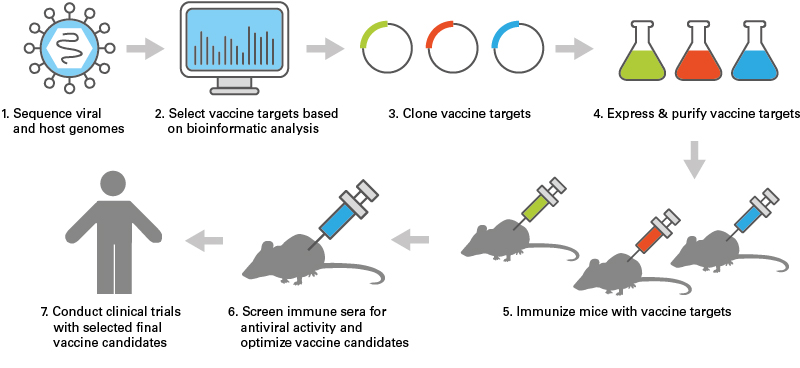
Bioinformatics has completely transformed how we discover and develop vaccines. It's like a superpower, enabling scientists to create new vaccines much faster, more effectively, and with lower costs than ever before.
By cleverly combining biology with pharmacology (the study of drugs), bioinformatics significantly reduces the time and expense needed to produce high-quality vaccines with fewer potential side effects.
6.2 Genomics: The Blueprint for Vaccine Development
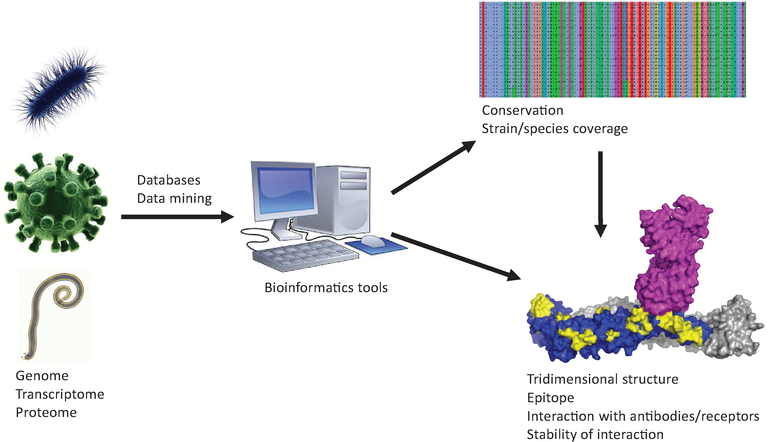
The study of an organism's entire genetic code, known as genomics, plays an incredibly important role in global health. It's foundational for understanding pathogens and designing defenses against them.
Here's a simplified look at how genomics contributes:
Get the complete genetic blueprint of the pathogen.
Use clever software to find all the individual genes within that blueprint.
Analyze what each gene does and how they interact with each other.
Identify specific genes or proteins that could be perfect targets for a new vaccine.
6.3 Smart Vaccine Design Strategies
Designing the perfect vaccine requires a deep understanding of many factors:
- Targeted Pathogens: Knowing everything about the biology of the pathogen we're fighting.
- Drug Interactions: Understanding how our vaccine might interact with other existing drugs.
- Host-Pathogen Interactions: Analyzing precisely how the pathogen behaves inside the host body.
| Awesome Benefits of Bioinformatics in Vaccine Design | How it Helps |
|---|---|
| Rapid Genome Sequencing | Quickly getting the genetic code of many different pathogens. |
| Large-Scale Data Collection | Gathering tons of information about both the host (us!) and the pathogens. |
| Identifying Conserved Regions | Finding parts of the pathogen that don't change much, even across different strains, making for a more stable vaccine target. |
| Predicting Antigenic Epitopes | Pinpointing the exact parts of the pathogen that our immune system will recognize – crucial for vaccine effectiveness. |
| Reduced Development Time | Slashing the time needed for vaccine development from many years to just months! |
💡 Remember: Bioinformatics makes vaccine design "SMART"!
Sequencing, Massive data, Antigen prediction, Reduced time, Targets!
6.4 The Computational Vaccine Design Workflow: A Step-by-Step Guide
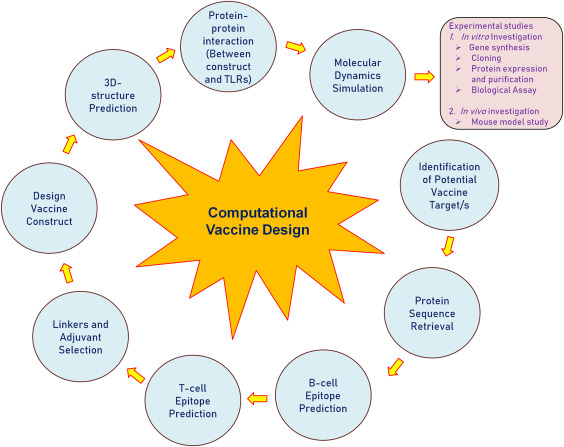
Designing a vaccine using computers is a multi-stage process:
- Retrieve relevant amino acid sequences from biological databases.
- Identify structural and non-structural proteins that could be good targets.
- Carefully select the most promising proteins or protein fragments as potential vaccine targets.
- Predict MHC Class I epitopes (recognized by cytotoxic T lymphocytes - CTL).
- Predict MHC Class II epitopes (recognized by helper T lymphocytes - HTL).
- Predict B-cell epitopes (recognized by B cells, leading to antibody production).
- Evaluate these predicted epitopes for important characteristics like antigenicity, allergenicity, immunogenicity, toxicity, and how well they would cover the global population.
- Design the overall vaccine structure, potentially including linkers (to connect different parts) and adjuvants (to boost the immune response).
- Predict the tertiary (3D) structure of the designed vaccine.
- Analyze its physicochemical parameters (like stability, solubility, etc.).
- Perform molecular docking to see how the vaccine might bind to immune cells.
- Refine the intermolecular bonds for optimal interaction.
- Conduct molecular dynamics simulations to observe the vaccine's behavior over time.
- Run computer simulations of the immune response to the designed vaccine.
- Perform codon optimization for efficient protein production and plan the cloning process.
- Final validation on the computer before moving to actual laboratory testing.
6.5 Epitope-Based Vaccine Design: Targeting the Immune System Precisely
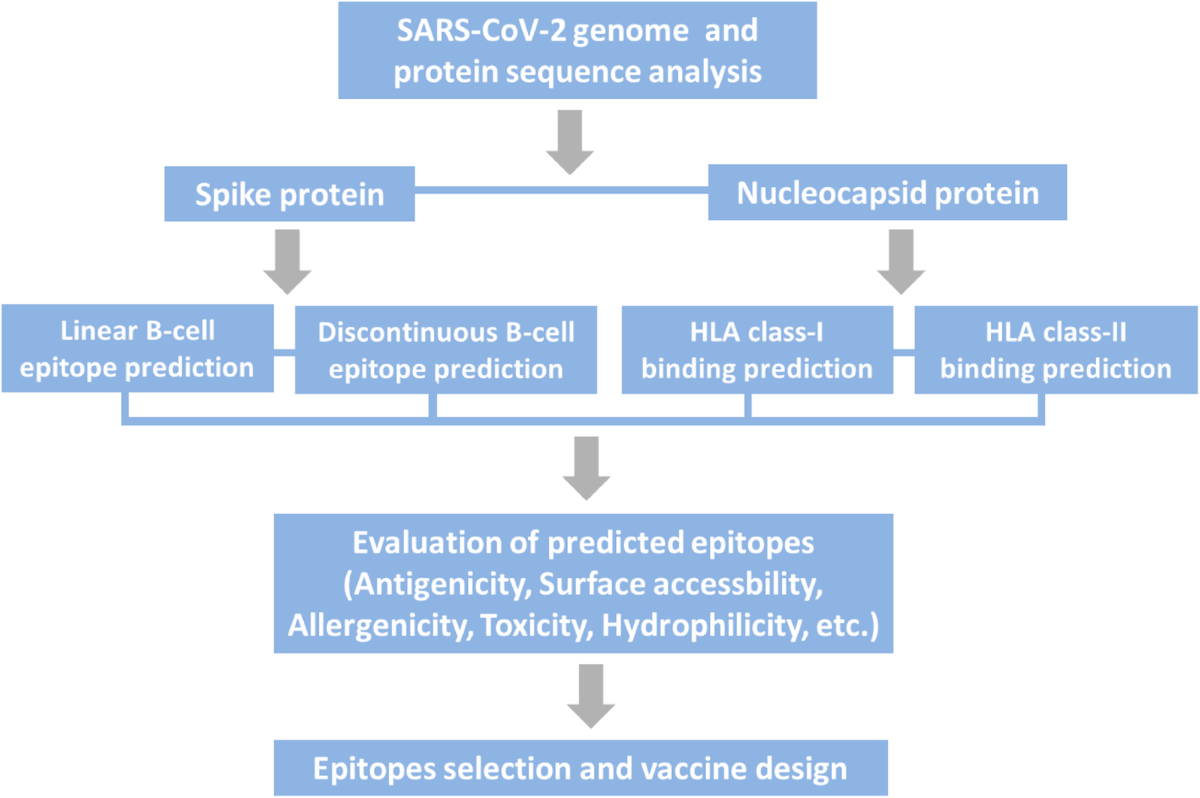
Epitope-based vaccines focus on using only the most crucial parts of a pathogen (epitopes) that trigger a strong immune response, making them highly specific and potentially safer.
🚀 Case Study: SARS-CoV-2 (COVID-19) Vaccine Development
Bioinformatics played a monumental role in the rapid development of COVID-19 vaccines:
- Genome and Protein Sequence Analysis: Scientists quickly analyzed the spike protein and nucleocapsid protein of the SARS-CoV-2 virus to find potential vaccine targets.
- Epitope Prediction:
- Predicting Linear B-cell epitopes and Discontinuous B-cell epitopes.
- Predicting binding to HLA Class-I and HLA Class-II molecules for T-cell responses.
- Evaluation Criteria: Each predicted epitope was rigorously evaluated for:
- Antigenicity (how well it stimulates an immune response)
- Surface Accessibility (if it's exposed on the pathogen)
- Allergenicity (potential to cause allergic reactions)
- Toxicity (potential harmful effects)
- Hydrophilicity (how well it dissolves in water, important for drug formulation)
- Final Selection: The best epitopes were chosen to design the final vaccine constructs, leading to the highly effective vaccines we have today.
6.6 Real-World Impact: Unprecedented Speed and Success
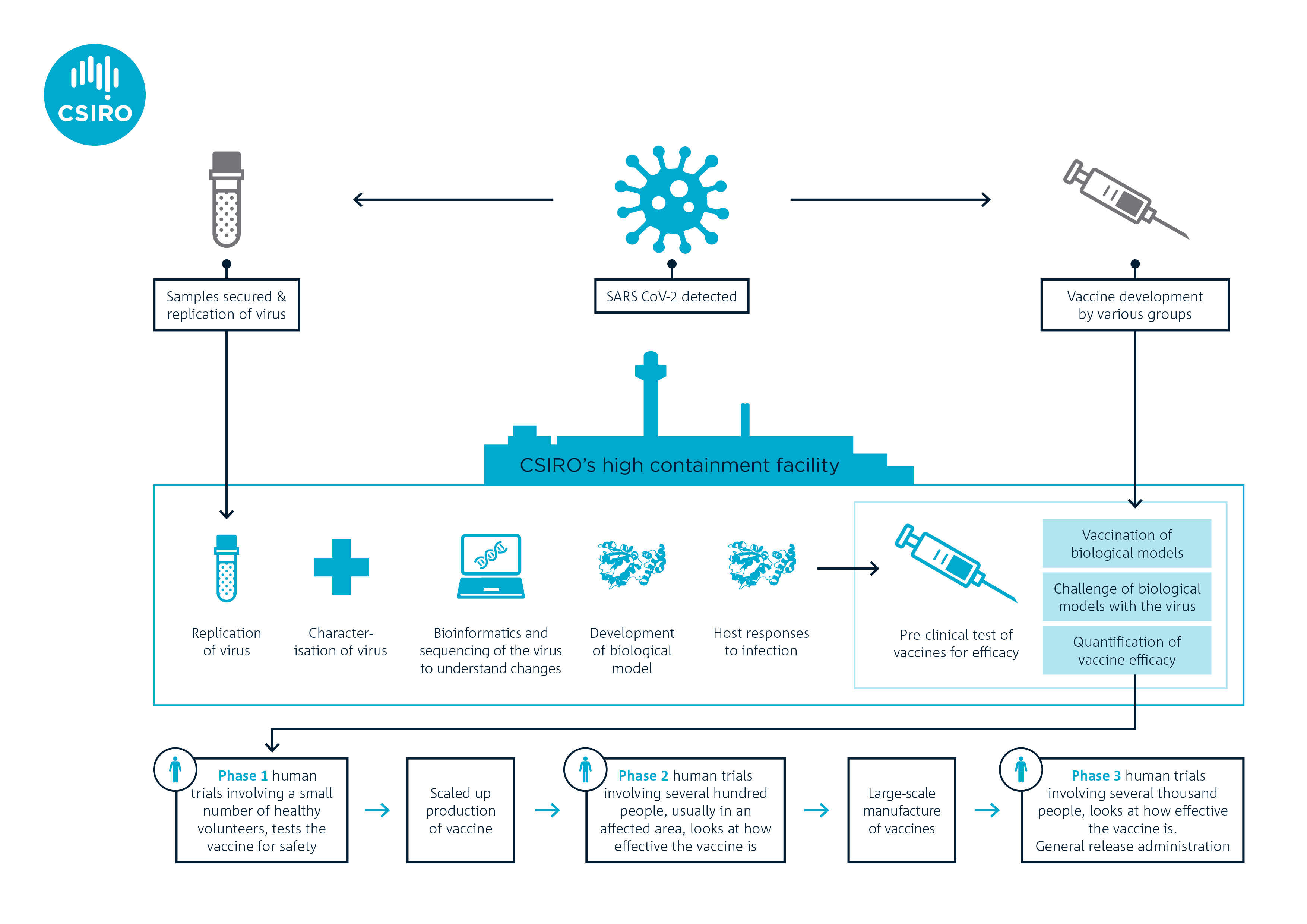
The impact of bioinformatics in vaccine development is perhaps best demonstrated by recent global health crises:
- COVID-19 Vaccine Development: Historically, developing a new vaccine could take 10-15 years. Thanks to bioinformatics, the first COVID-19 vaccines were developed and deployed in less than one year! This incredibly rapid response was possible because:
- Rapid genome sequencing of the virus quickly identified potential targets.
- Computational tools dramatically sped up the design, testing (in silico), and optimization processes.
Here’s a summary of the incredible benefits:
| Key Benefit | Description of Impact |
|---|---|
| Time Reduction | Cutting vaccine development from many years to mere months. |
| Cost Efficiency | Significantly lowering the huge research and development costs. |
| Enhanced Safety | Better prediction of potential side effects and adverse reactions. |
| Improved Efficacy | More effective vaccines due to precise target selection and design. |
| Greater Precision | Opening doors for personalized vaccine approaches tailored to individuals. |
7. Your Quick Review: Key Concepts in Bioinformatics!
Let's quickly recap the most important ideas we've covered:
🔬 Bioinformatics Fundamentals:
- It's a vibrant, interdisciplinary field that marries biology with computer science and statistics.
- Absolutely essential for managing, analyzing, and interpreting the vast amounts of biological data we generate today.
- It's a critical, modern tool for cutting-edge biological research, drug discovery, and medical advancements.
📚 The Importance of Databases:
- Think of them as highly organized digital libraries of all biological information.
- There are many different types, each serving unique research needs (sequences, structures, pathways, etc.).
- A mix of public and private resources are available, constantly updated with the latest discoveries.
💉 Impact on Vaccine Discovery:
- Bioinformatics has dramatically sped up vaccine development, turning years into months.
- It enables "rational" vaccine design, meaning we can build vaccines with precision and intention.
- Crucial for rapid responses to new and emerging diseases (like COVID-19!).
- Helps predict and improve both the safety and effectiveness of vaccines before they even reach clinical trials.
Upgrade to Success Pass (₹30) to unlock downloads and printing.